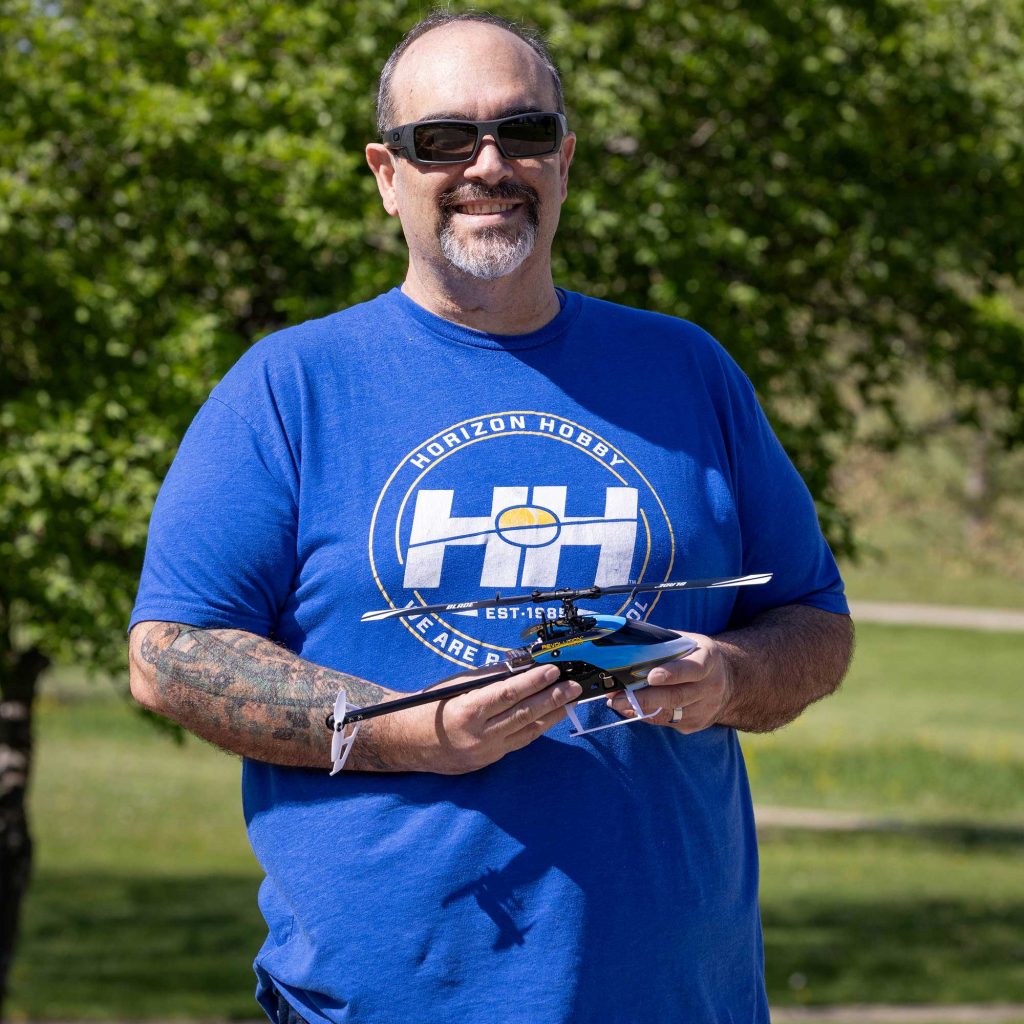
Blade has listed the Revolution 155 CP for September 2026, and the ready-to-fly package includes something every aspiring RC heli pilot can appreciate: a simulator. Learning on screen before learning the price of spare blades is an arrangement we can get behind.
The BLH01600 ready-to-fly (RTF) package updates the 150 S and includes a Spektrum DXS transmitter and RealFlight Trainer Edition. Horizon’s US listing shows $299.99; that isn’t a confirmed UK price or collection date. Ask your retailer about the local package and availability. We haven’t flown a review model, so this is a look at the announcement and what it means for someone learning collective pitch.
Collective pitch, minus the head-scratching
Collective pitch (CP) means changing the angle of the main rotor blades together to control lift, rather than relying mainly on changing rotor speed to climb or descend. It gives you a route into more advanced flying, but it also asks more of your setup and coordination.
That’s the attraction as much as the challenge. A helicopter asks your hands to manage height, direction and attitude together. At first it can feel as though one thumb has read the instructions and the other has popped out for a kebab. With practice, those small corrections begin to connect and a hover starts looking deliberate rather than negotiated.
There’s no need to apologise for finding it difficult. Holding a heli in a chosen patch of sky is a skill. The fact that someone on a screen can do it upside down while making conversation doesn’t mean you should be able to do the same before tea.
What comes with the helicopter?
Blade lists brushless main and tail motors, three metal-geared servos and a flight controller with stabilisation and SAFE assistance. It also describes a Smart Transmitter File for compatible Spektrum NX and iX radios, intended to make setup simpler. The RTF package includes the DXS radio; compare versions against the equipment you already own.
Keep those assistance features in perspective. They’re useful things to understand, not permission to skip the flight-mode section of the manual. Know what each switch does, how to use throttle hold and what behaviour to expect from the chosen mode before the rotor starts turning.
A supported setup file can take some work out of programming, but it doesn’t replace checking the result. You’re still the person holding the transmitter. That’s a much nicer responsibility when you’ve already worked out which switch is which on the ground.
The simulator is part of the package, so use it
Start with a tail-in hover: the tail faces you and the helicopter points in the same direction you’re looking. Practise taking off, staying roughly where you intended and landing deliberately. Those are proper achievements, even without dramatic music or a slow-motion replay.
Then work through other orientations gradually. When the model faces you, some inputs feel reversed. Your brain needs repetition to make that response familiar. Blaming your thumbs is traditional, but giving them some focused practice usually helps more.
Short sessions make it easier to stay attentive. Pick one thing that keeps catching you out and work on it, instead of spending every practice doing the manoeuvre that already feels comfortable. The reset button is useful, but the aim isn’t to find increasingly inventive reasons to press it.
A simple note after practice can help: which orientation was awkward, whether you over-corrected and what improved. Next time you sit down, you have a job to try rather than a vague ambition to become brilliant at helicopters immediately. Tempting plan. Quite a big Tuesday. Perhaps nail the landing before applying to headline the air show.
Small helicopter, sensible flying space
A compact model still needs a suitable clear area. Follow the manual’s preparation checks and keep people away from the rotors. Assistance systems don’t make obstacles disappear or turn an unsuitable spot into a flying field.
After a knock, stop and inspect. Damaged blades or a bent component can introduce vibration, and another flight won’t diagnose that for you. Ask an experienced pilot if you’re unsure what normal movement should look or feel like. A second pair of eyes is particularly handy when you’re still learning the mechanical side.
An RC helicopter club can help with setup and the progression from hovering to circuits. Turning up with questions is fine. Nobody arrived knowing how every linkage, switch and flying mode worked, whatever their current collection might suggest.
Why this announcement is interesting
The appeal is a package built around progression: a collective-pitch model, assistance features and a way to practise before committing the real helicopter to the lesson. Whether the Revolution delivers on that promise is something hands-on flying will need to establish.
If you’re already a pilot, compare the model and package with what you use now. If you’re starting out, give yourself time to learn. A controlled take-off, a tidy hover and a landing where you meant to land can leave you properly chuffed. Aerobatics can wait. Getting the heli back on the ground in one piece, on purpose, deserves its own small celebration.